Learn
What can you build with Questiory?
An overview of the kinds of experiences you can create with Questiory, organized by context. From learning modules to team icebreakers to data visualizations.
Questiory is flexible enough that the answer to “what can I build?” is a long one. People use it for learning design, facilitation, team culture, research, storytelling, and a lot in between.
The best way to get a feel for the range is to see real examples. Here are some that show what the tool can do, organized by context.
Workshops and facilitation
Activities designed to run with a group, live or async. These tend to combine individual responses with collective visualizations so the facilitator can surface shared patterns and spark discussion.
Interactive workshop
A full facilitated session structure with icebreaker, activities, and closing reflection.
Crazy 8s brainstorm
Fast-paced sketching activity that generates a lot of ideas in a short time.
Collective empathy map
Build a shared understanding of a user, persona, or stakeholder as a group.
Rose, bud and thorn
A structured reflection format for gathering positives, opportunities, and challenges.

Team brainstorming
Generate and organize ideas from the whole group without the usual loud voices dominating.
Collaborative SWOT analysis
Everyone contributes to each quadrant and the result is built by the group, not just the facilitator.
Learning experience design
Experiences designed around learning objectives: activating prior knowledge, checking understanding, building content collaboratively, or replacing a traditional quiz with something more interesting.

Interactive learning module
A full learning experience combining instruction, reflection, and collaborative activities.
Gamification of learning
Challenges, points, and interaction patterns that make learning feel less like a course.
Collaborative learning experience
Participants contribute ideas that build the content together in real time.
I used to think, now I think
A reflective activity that makes learning shifts visible to the whole group.
Training needs assessment
Identify gaps and priorities before designing any learning initiative.
Emotional intelligence self-assessment
Replace a generic quiz with a reflective assessment that produces real insight.
Team and workplace
Experiences built around people ops, team culture, and professional development. These tend to be used by HR teams and managers, but also by individuals who want a more structured way to reflect and grow.

Remote employee onboarding
Balance the essential information with the human connection that remote onboarding often skips.

Professional development plan
Define goals, assess strengths, and map out an actionable growth path.

360 emotional competencies radar
Compare self-perception with peer perception across emotional dimensions.
Employee engagement pulse survey
A short, recurring check-in that shows trends over time and surfaces what actually matters to the team.

Interactive one-on-one
Give structure to 1:1 conversations so they are consistent, thoughtful, and actually useful.
SMART goals generator
Walk through goal-setting step by step and come out with something concrete.
Creative and storytelling
Experiences where the medium is part of the message. Comics, moodboards, card decks, interactive pitch decks. These tend to look different from what people expect from a “survey tool.”
Social comic book strip
Each participant draws a panel and the group builds a collaborative comic in real time.
Collaborative moodboard
Collect images and words from the whole group and watch a shared vision emerge.
Creative art workshop
Drawing prompts and visual activities that work with groups of any size.
Interactive pitch deck
Present an idea and collect live reactions, questions, and feedback as you go.
Creative questionnaire
A questionnaire that uses visuals, icons, and interaction types beyond multiple choice.
Collective digital Ikigai
A reflective exercise that maps purpose, skills, and motivation across the whole group.
Data and feedback
Experiences designed to collect input and present it visually. These work well as standalone tools — share a link, collect responses over time, and the chart builds itself.
Collaborative pictogram
Turn a simple question into a visual infographic built by the group's responses.
Bar chart generator
The group votes and the chart builds itself in real time — no spreadsheet required.
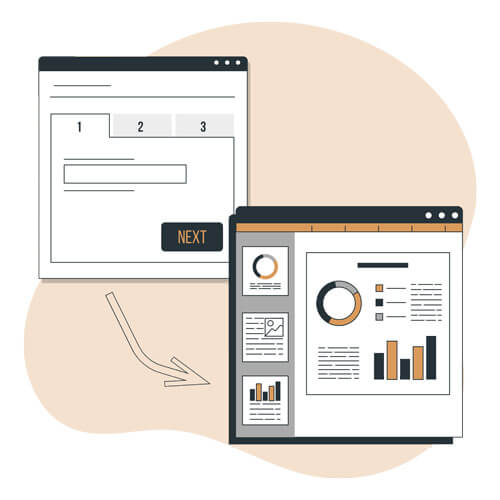
Survey and report in one
Collect responses and present findings in the same experience — no separate report needed.
Digital confidence voting
Gauge how the group feels about a topic before and after a session or decision.
Stakeholder mapping
Map out key players, relationships, and influence levels as a collaborative exercise.
Culture and mood radar
A recurring check-in that maps team culture across multiple dimensions.
Icebreakers and team games
Short, low-stakes activities that warm up a group, spark conversation, or just make a meeting a bit less flat. These work live or async.
Online icebreaker
A simple warm-up activity that gets everyone contributing before the main session.

Would you rather: team edition
Live split results reveal surprising things about the people you work with.
Gratitude circle
A closing ritual that ends sessions on a positive, human note.
Origins
Everyone shares where they're from and the group sees the diversity on a shared visual.
Who's who?
A get-to-know-you activity where the group tries to match facts to the right person.
5-minute team games
Quick activities designed to be fun and easy, even on a tight schedule.
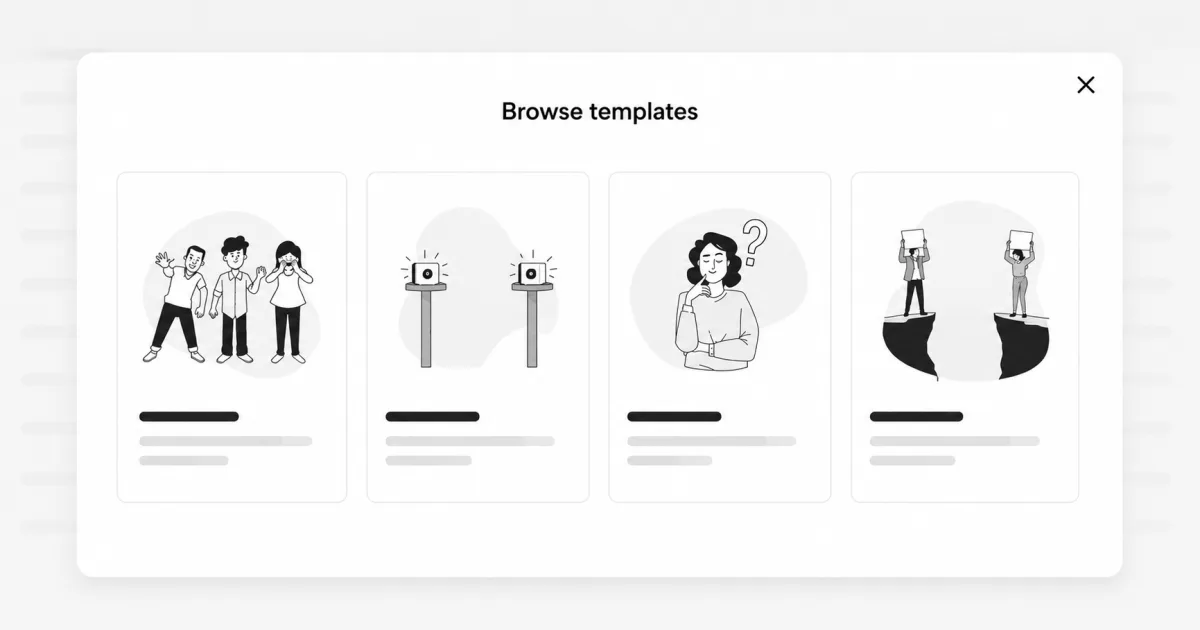
There are more than 80 examples in total. These are just a starting point. Browse them all on the examples page.
Ready to start building?
Some guides to help you get going.